Work / Project
PortGate Nexus
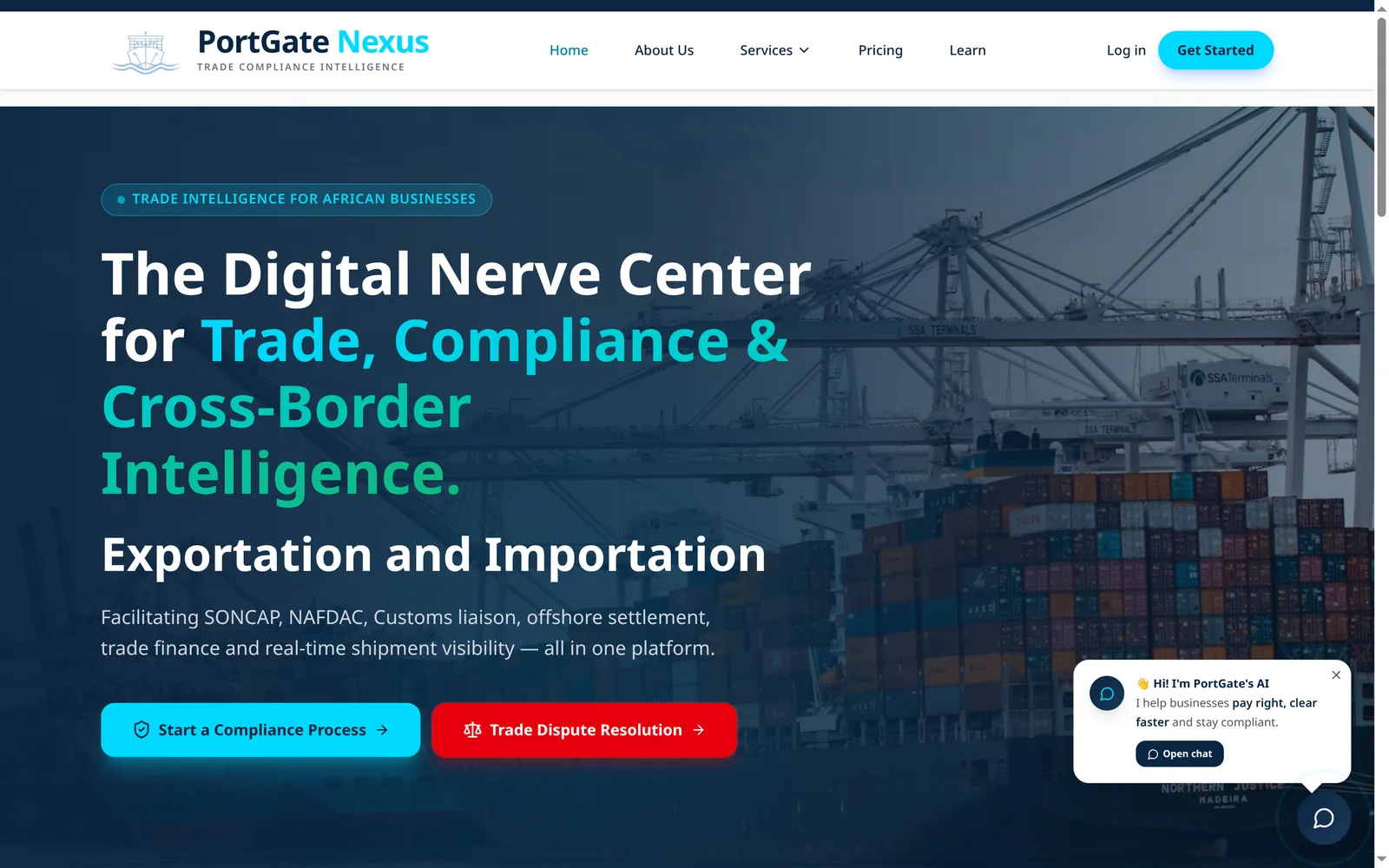
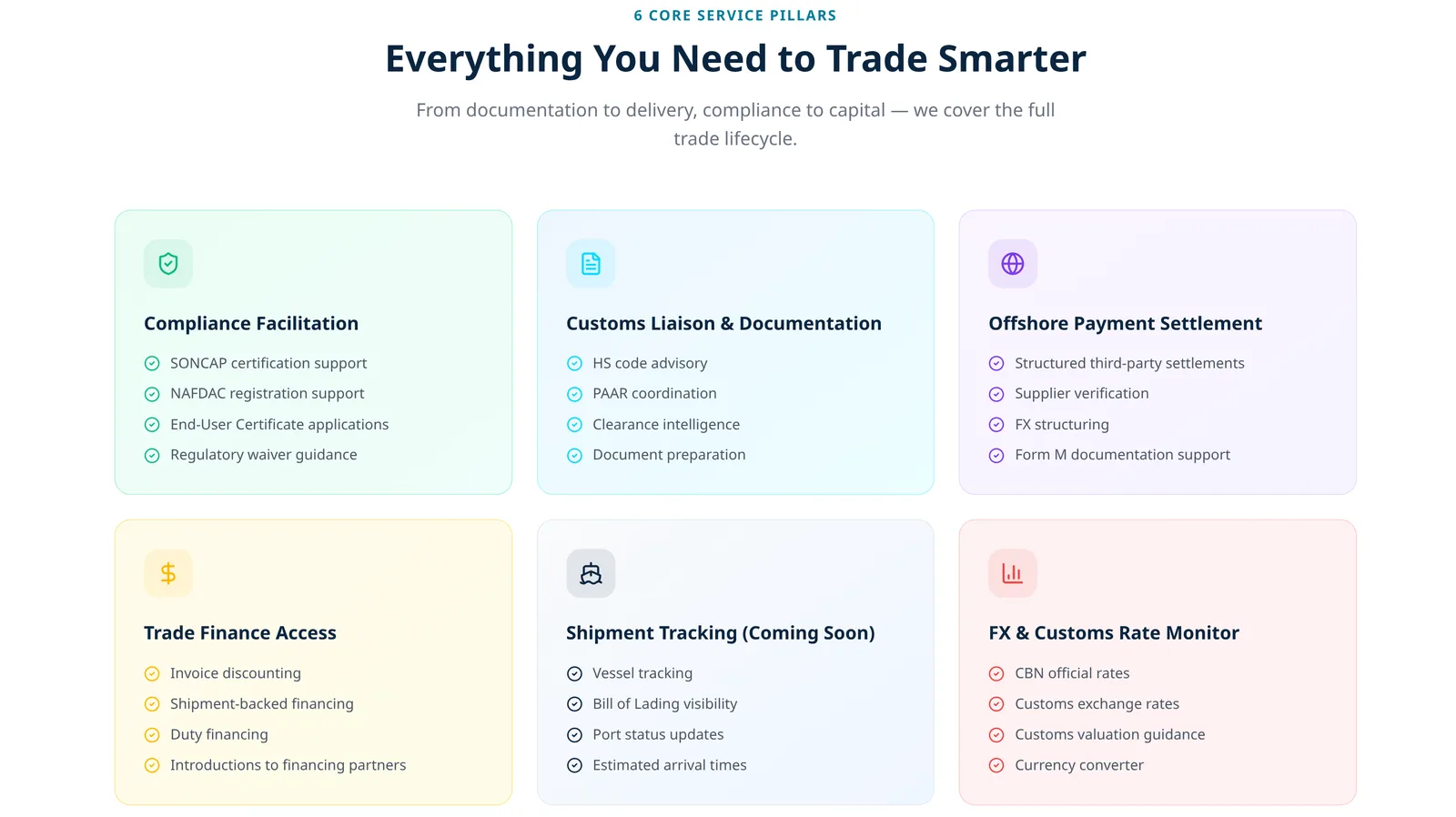
A trade-compliance platform for Nigerian importers and exporters: SONCAP and NAFDAC processes, customs documents, duty estimates and offshore payments, with separate portals for customers and compliance officers.
Condition: tariff codes decide how much duty a business pays. An AI can suggest a code, but it must never be allowed to invent one.
- Engagement
- 3O1Atech product, led by my co-developer
- My part
- Contributor, about one in six commits: payments and pricing, support and officer workflow, the LLM tariff classifier, security hardening and deployment
- Status
- Live. The LLM classifier is built on a branch and not yet released.
- Stack
- React, Django REST Framework, FastAPI, OpenAI-compatible LLM APIs (Gemini and others)
- Links
- portgatenexus.com (code is private)
What I built
- Payments and pricing. Pricing worked out from the number of containers in a shipment, payment verification, blocking incomplete duty submissions, and a pay-later option.
- Support and officer workflow. Support tickets that staff can claim and transfer, assigning officers to a client's transaction, and a message tab with in-page chat on each shipment.
- Security and deployment. Hardening and VPS deployment for the API and the AI service; a cookie notice and policy pages on the site.
- FX monitor. Shows how each official exchange rate has moved since the previous Central Bank publication.
Most of PortGate was written by my co-developer. The list above is my part.
The hard part
Classifying goods into the right HS tariff code from a plain description, such as a line on an invoice. I built the classifier in the AI service so that the model chooses, but never makes up, the answer:
- A semantic search over Nigeria's Common External Tariff table finds the most likely candidate codes.
- An LLM picks among them using two strategies at once: choosing straight from the candidates, and choosing the heading first and then the line within it.
- Every code the model returns is checked against the tariff table, so an invented code can't get through. When both strategies agree, confidence goes up.
- Answers already verified by officers come first; the older classifier remains as a fallback. Providers rotate when one is rate-limited, and whole invoices can be classified at once.
Where it stands
The platform is live. The site hardening, cookie notice and policy pages went live in November 2026. My classifier, the FX-change feature and the API and AI-service hardening are on a branch waiting to be merged and released, so the live site doesn't use them yet.